Why You'll Love It
- - Nutty flavor that’s both rich and light
- - Quick prep, perfect for busy afternoons
- - Vibrant green color that lifts the plate
- - Versatile base for added veggies or cheese
"The pistachio pesto turned my ordinary spaghetti into a celebration—so fresh, so bright!"
Essential Ingredient Guide
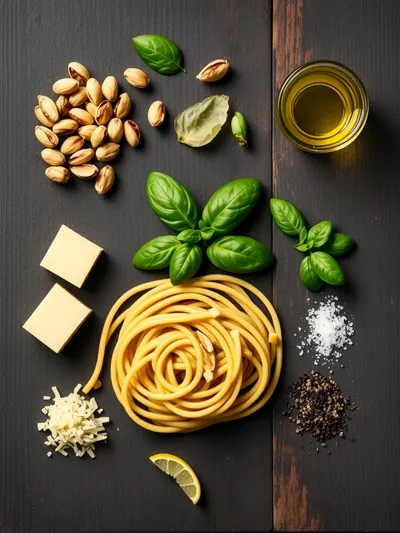
- Pistachios: Choose unsalted, raw pistachios; they give the pesto its buttery depth and subtle sweetness.
- Fresh basil: Use vibrant leaves; they add aromatic brightness that balances the nuts.
- Parmesan cheese: Aged Parmesan adds umami and a hint of saltiness without overwhelming the pistachios.
- Garlic: A small clove brings gentle heat; crush it to release its fragrant oils.
- Lemon juice: A splash adds acidity that lifts the richness and keeps the green color vivid.
- Olive oil: Extra‑virgin olive oil creates a silky texture; drizzle slowly while blending.
Complete Cooking Process
-
Ingredient Readiness:
Measure pistachios, grate cheese, and rinse basil; this ensures a smooth blend without scrambling the sauce.
-
Flavor Development:
Toast pistachios lightly to deepen their nutty aroma before blending with garlic and herbs.
-
Texture Control:
Pulse the pesto to keep small bits of pistachio for gentle crunch, then drizzle oil for creaminess.
-
Finishing Touches:
Toss cooked pasta with the pesto, adding a drizzle of lemon juice and a sprinkle of extra cheese.
-
Serving Timing:
Serve warm, allowing the sauce to cling to the noodles; garnish with a few whole pistachios for visual interest.
- Reserve a cup of pasta water to loosen the pesto if needed.
- Use a food processor for an even blend, but finish by hand for texture.
- Add a pinch of sea salt after tasting; pistachios can be mildly salty.
- Serve immediately to enjoy the fresh fragrance of basil.
Pro Tips
Well, I find that a quick taste before plating saves the dish from being too salty—just a gentle adjustment. Also, if you have extra pistachios on hand, toast them again lightly and sprinkle over the finished plate; the warm aroma will make the whole meal feel even more comforting. So, take a moment, inhale the scent, and enjoy the simple pleasure of a well‑balanced pesto.
The essence of the dish:
A fun fact or historical angle:
Flavor or sensory focus:
You Must Know
- Use fresh pasta for the best texture
- Don’t over‑blend; keep a slight grain
- Season after blending, not before
Frequently Asked Questions
→ Can I use frozen pistachios?
Yes, thaw them completely and pat dry before blending; the flavor remains intact.
→ What pasta shape works best?
Long ribbons like linguine or fettuccine hold the pesto nicely, but you can also use fusilli for extra crevices.
→ Is this recipe gluten‑free?
Swap regular pasta for gluten‑free varieties; the pesto itself is naturally gluten‑free.
→ How long can the pesto be stored?
Keep it in an airtight container in the fridge for up to three days; stir before using.
→ Can I add veggies?
Absolutely—roasted cherry tomatoes or sautéed zucchini complement the nutty flavor.
→ What’s a good wine pairing?
A crisp Sauvignon Blanc or a light Pinot Grigio enhances the bright herb notes.
Chef's Tips
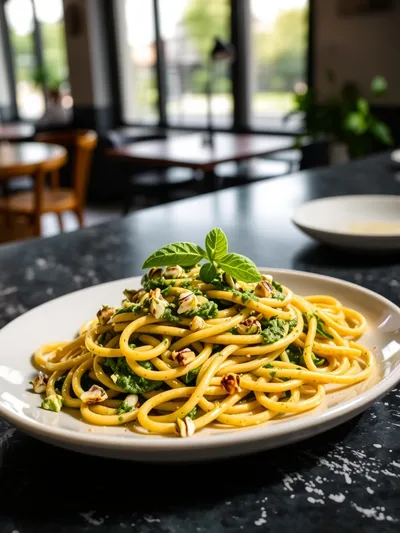
If you prefer a creamier sauce, stir in a spoonful of ricotta after tossing the pasta.,For a vegan version, replace Parmesan with nutritional yeast.,A splash of the creamy pesto pasta sauce can add extra richness without dairy.
Nutrition Facts
per serving
420
Calories
14g
Protein
45g
Carbs
18g
Fat
Taste Profile
Nutty, herbaceous, and lightly tangy
Ingredient Substitutions
Don't have an ingredient? Try these alternatives
Almonds give a slightly sweeter profile; adjust oil if needed.
Provides a cheesy umami flavor suited for vegans.
Recipe Variations
Try these delicious twists on the original
Spicy Version
Add a pinch of red pepper flakes and a drizzle of hot sauce for a gentle kick.
Mediterranean Style
Stir in chopped sun‑dried tomatoes, Kalamata olives, and crumbled feta for a briny twist.
Common Mistakes to Avoid
Learn from others' mistakes for perfect results
- Over‑blending pesto, resulting in a flat texture.
- Using too much oil, making the sauce greasy.
- Forgetting to reserve pasta water, leading to a dry coating.
Meal Prep & Storage
Make Ahead Tips
Toast pistachios and store them in an airtight jar; the pesto can be blended up to 24 hours in advance and kept refrigerated.
Leftover Ideas
Reheat gently in a skillet with a splash of pasta water; avoid microwaving to keep the texture smooth.
Perfect Pairings
Serve this with...
Cooking Timeline
Gather and measure all ingredients; toast pistachios.
Bring water to a boil; start cooking pasta.
Blend pesto ingredients while pasta finishes cooking.
Combine pasta with pesto, adjust consistency with reserved water, and plate.
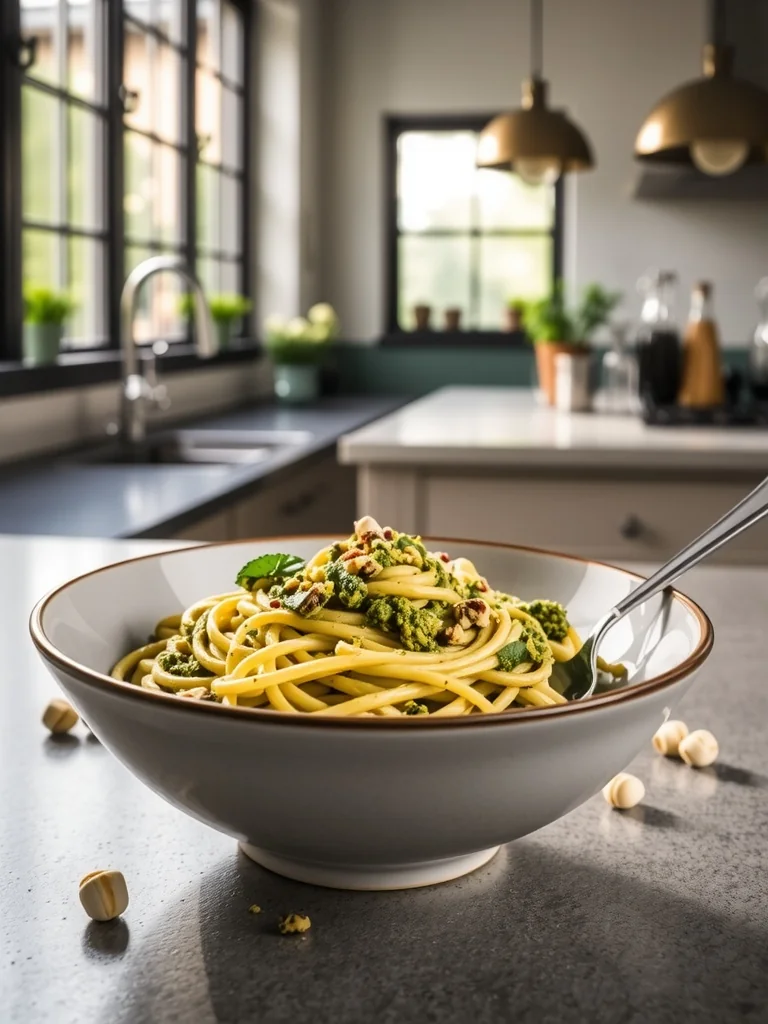
Pistachio Pesto Pasta – Fresh Quick Meal
A bright, nutty pistachio pesto tossed with al dente pasta, ready in minutes for a satisfying lunch that feels both fresh and comforting.
Timing
Prep Time
10 Minutes
Cook Time
12 Minutes
Total Time
22 Minutes
Recipe Details
Ingredients
Main Ingredients
- 01 12 oz pasta (linguine or fettuccine)
- 02 1 cup unsalted pistachios, raw
- 03 1 cup fresh basil leaves
- 04 1/2 cup grated Parmesan cheese
- 05 2 cloves garlic, peeled
- 06 2 tbsp lemon juice
- 07 1/3 cup extra‑virgin olive oil
- 08 Salt and freshly ground black pepper to taste
Instructions
Bring a large pot of salted water to a boil; cook the pasta according to package directions until al dente, then reserve 1 cup of the cooking water and drain.
Meanwhile, toast the pistachios in a dry skillet over medium heat for 2‑3 minutes, stirring constantly until fragrant; let cool.
In a food processor, combine the cooled pistachios, basil, Parmesan, garlic, and lemon juice; pulse until coarsely blended.
With the processor running, slowly drizzle in olive oil until the mixture forms a smooth yet slightly textured pesto; season with salt and pepper.
Toss the hot pasta with the pesto, adding reserved pasta water a little at a time until the sauce coats each strand beautifully.
Serve immediately, garnished with extra pistachios, a drizzle of olive oil, and optional grated cheese.
Notes & Tips
- 1 If you prefer a creamier sauce, stir in a spoonful of ricotta after tossing the pasta.
- 2 For a vegan version, replace Parmesan with nutritional yeast.
- 3 A splash of the creamy pesto pasta sauce can add extra richness without dairy.
Tools You'll Need
-
Large pot
-
Skillet for toasting nuts
-
Food processor
-
Colander
-
Measuring cups
-
Wooden spoon
Must-Know Tips
- Don't over‑process the pesto; a slight texture keeps it interesting.
- Reserve pasta water to adjust sauce consistency.
- Taste and adjust seasoning after blending, not before.
Professional Secrets
- Use pistachios at room temperature for smoother blending.
- Add lemon juice at the end to keep the vibrant green color.
- Finish with a drizzle of cold olive oil for a glossy sheen.

Recipe by
EvaEva is a seasoned home‑cook turned recipe developer who brings a dash of curiosity and a pinch of precision to every dish she creates for Your Website ...
Get Delicious Recipes Weekly
Join 25,000+ home cooks getting our best recipes straight to their inbox.
Free forever • No spam • Unsubscribe anytime